


I have always been fully aware of the fact that, due to my family’s medical history, I was deemed to be in the high-risk group for cancer, and I regularly reported for my annual checkups. In 1995, I detected a lump in my right breast. Mammography and sonar scans revealed cysts, which the doctors classified as non-cancerous fibrocystic. The doctors reassured me that this was a common occurrence in the breasts of women of my age and nothing to worry about.
If I knew then what was in store for me, I would have paid more attention to the subtle signals my body was firing to alert my brain to the fact that something was seriously wrong with me; insomnia, chronic fatigue, uncommon heavy bleeding during menstruation, killer migraines, the unexpected sensitivity in my armpits and swelling in my right arm after a long day of driving around. Instead, I just made a point of turning up at the radiologists on a regular basis and each time I was pacified by the negative results indicated by mammograms and sonar examinations.
In 2001, I accepted a transfer to the head office of the large commercial bank where I worked.
Six months after arriving in Johannesburg, I reported for my usual checkup at a clinic near our apartment. The radiologist mentioned that she was a little concerned about the results of the latest mammogram. The surgeon to whom I was referred inserted a thin wire into the breast to remove some tissue from the cyst. This was an incredibly painful procedure, but to my relief, the test came back negative a few days later.
However, the surgeon was uneasy and persuaded me to book into the clinic for a wedge biopsy under general anaesthesia. His gut feeling proved true. There were, in fact, cancer cells, not in the lump itself, but obscured in the tissue behind it. He recommended a full mastectomy as soon as possible to ensure that all the cancer cells were removed.
Thus, on her seventeenth birthday, I gave my daughter a Tweety Bird birthday cake specially ordered from the bakery around the corner, a jigsaw puzzle featuring a leopard in a tree, and the news that I was diagnosed with breast cancer.
Karen was devastated. I would have given anything to hold back this last bit of news, but she could hardly miss the sudden increased activity in our apartment: the endless telephone calls and doctor’s appointments, the unannounced visit by her grandmother and the fact that her brother arrived for an impromptu stay after a five-year-long separation, carrying all his worldly possessions in a cardboard box under his arm.
She needed to hear this diagnosis from me, and the surgeon wanted to go ahead with the mastectomy as soon as possible. I tried to reassure her that breast cancer is not necessarily a death sentence and that I would receive the best possible treatment.
I have been a member of the excellent medical aid fund offered to bank officials for many years already and remain on their comprehensive medical plan to this day. They were informed of the diagnosis, and in consultation with my doctors, a treatment plan was approved in no time. I am really grateful for this, as all medical costs for cancer treatment were, and still are to this day, covered 100% by the fund.
Karen remained apprehensive, understandably so. She had very little contact with her father and two siblings after our divorce in 1992 and depended solely on her ageing grandmother and me for sustenance. So soon after our move to Johannesburg, she was still trying her best to adjust to the new Grade 11 curriculum, which differed vastly from the schooling she had previously received in Bloemfontein. Making friends at school proved difficult at first, and I was at work the whole day. It was a very lonely time for her.
Both my sons lived with their father in Cape Town for the past five years. My eldest son was working part-time, and I asked him to give up his job and come to Johannesburg for a few weeks. I hoped that he would be company for Karen.
Also, the surgical procedures left me unable to drive my car, and public transport did not exist in Johannesburg at the time, no suburban trains, buses, or taxis. I was worried about getting to and from work. Driving from Florida, situated on the West Rand, to the Johannesburg CBD in early-morning and late-afternoon traffic was no mean feat at the best of times.
Corné brought his personal computer to keep himself occupied, and soon settled into the household routine. At least we were now able to go to the shops, to the doctors’ offices and hospital, and later on maybe the occasional recreational outing. And, of course, I would have to start working again as soon as possible after completion of the upcoming medical procedures.
Five days after Karen’s birthday, I was admitted to the clinic for a full mastectomy of the right breast. After the surgery, the surgeon mentioned that he removed five axillary nodes under my right arm, but no further cancer cells were found. This was good news, yes? Or maybe not. The surgeon’s sombre demeanour hinted that this might not yet be the end of the ordeal. This man’s knowledge of his subject and many years of experience in his field undoubtedly saved my life.
During and after the time I was first diagnosed, I only wanted to deal with the diagnosis and treatment as efficiently and fast as possible and get back to living my life the way I thought it was supposed to go.
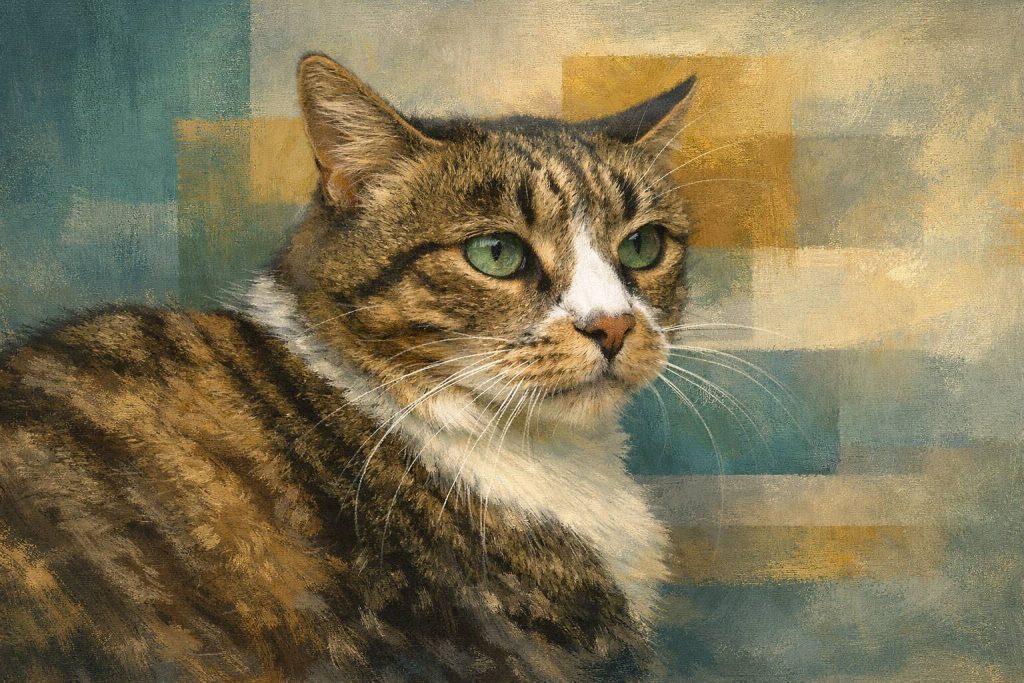
On my first evening back home after the mastectomy, I went to bed, where Ollie was waiting to comfort me. Ollie was Karen’s majestically fat tabby cat who slept in her bed every night, but since the first day I returned home after the mastectomy, I woke up with a cat in my bed. It was a strange comfort to feel the plump, warm little body next to mine. I needed that comfort. Karen had to sleep alone for the first time in many years.
I was so tired, but I couldn’t sleep. Not only was I worried about the future, but saying I was pissed off about this new setback in my life was putting it lightly.
I had just started settling into the job that I had been coveting for a very long time. In my mid-forties, I decided to further pursue my legal studies and recently obtained my L.L.B. degree. On the day that I would have attended my graduation ceremony, I underwent a mastectomy.
The robe I hired for the ceremony remained in its plastic packaging until Corné insisted on taking me to a professional photographer to capture my great achievement, wearing the robe and holding a blank roll of paper.
For the first time in my life, I crawled into a deep hole of depression, where all I could feel was a dark, nameless rage. I refused to reach out to any of the support groups the hospital proposed, did not allow visitors, and did not take phone calls. I was worried about my job, afraid that I would die of this disease and leave my young daughter behind.
And yes, I blamed the medical practitioners who did not diagnose the cancer earlier. I was always reassured that this drastic procedure was not necessary, but I now knew that removing the lump could have led to the cancer being detected earlier.
Featured image: I obtained my L.L.B. degree extramurally at Unisa in 2001, and I underwent a mastectomy on 20 September 2001, the day after the photo was taken. I was 50 years old.

Sjoe Hester, aandoenlike vertelling!
Dankie By. Dit was ‘n terrible tyd in my lewe.
Poe, Hester, hier word ik stil van
Dit was moeilik om die diagnose te verwerk, maar jy moet maar die beste maak van ‘n slegte saak. Humor en ‘n wil om vorentoe te beweeg, is onontbeerlik.
Je bent een sterk mens, Hester, mét veel humor
Ek hou daarvan om te lag en ek glo vas dis goed vir my fisiese en geestelike gesondheid.